 Look
A coordinated table starts with complete place settings. Six guests do not necessarily need six of every product—or one of every pack. Count plates, napkins, glasses and flatware coverage separately before spending on the centerpiece.
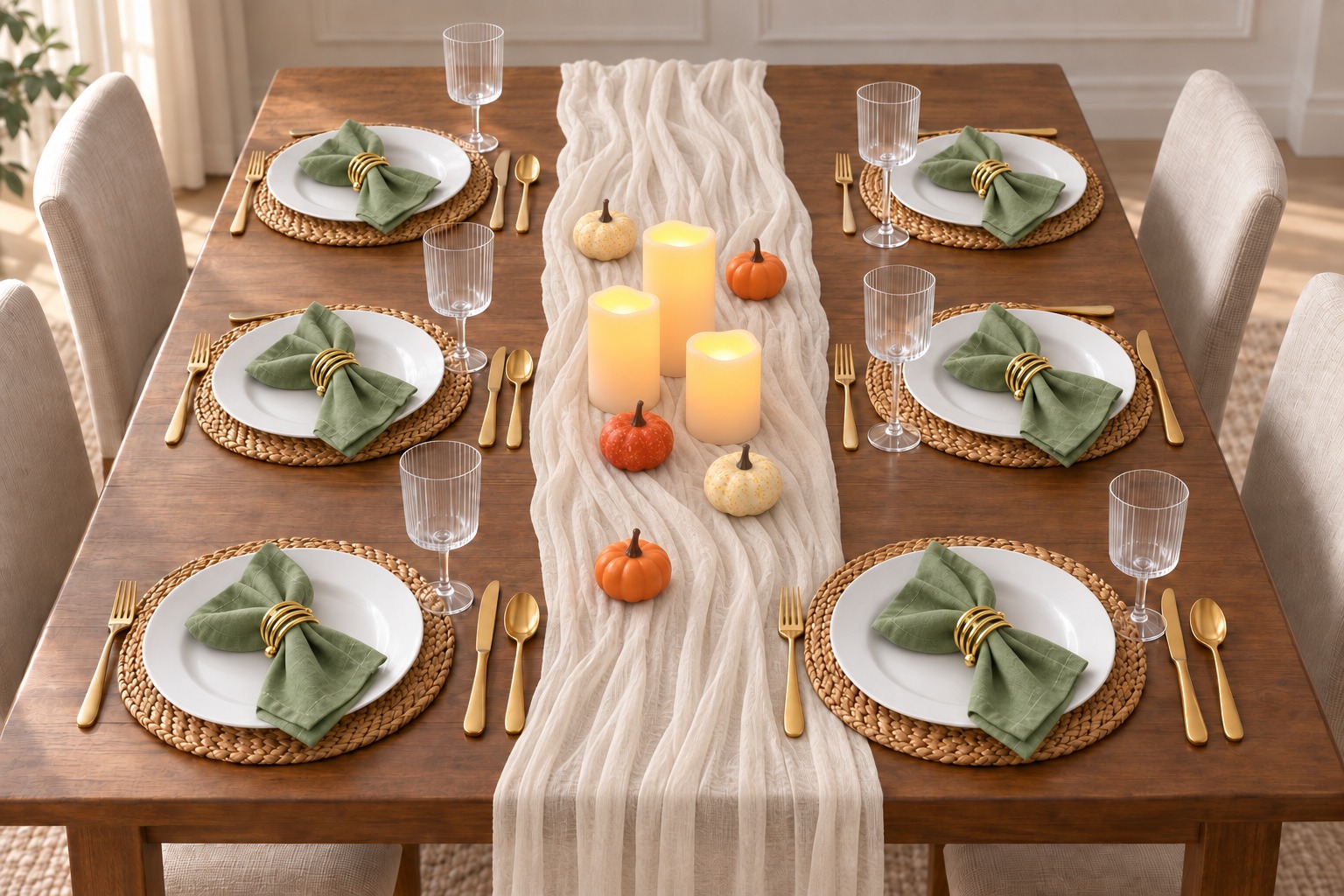
A 20-piece set can still leave two guests without cutlery
Picture this: six friends are coming for dinner. You order a pack of six plates and a 20-piece flatware set. The numbers look generous, but this particular flatware pack provides only four complete place settings. One pack leaves two people short; two packs cover eight people, with two settings to spare.
Our Gather in Sage plan includes two four-place flatware packs. Its plate pack covers six and goblets cover twelve. The selected Sage Green napkin variant contains six napkins, so eight guests need two packs. The leftover pieces are a consequence of retail packaging, not an instruction to put everything on the table.
Separate the guest count from the decoration count
Each guest needs a usable place setting. A pumpkin or vase does not follow the same rule. The selected pumpkin pack contains fourteen mini pumpkins and two leaves; the arrangement uses five pumpkins.
Put your actual serving dishes in the center during a trial setup. Keep a few accents that fit around them and store the rest. If a bowl has nowhere to land, removing a decoration usually helps more than buying a narrower version of the same object.
Make this personal: compare a plan against your budget and start with the pieces you need.
Write the smallest shopping list that completes the table
The full six-person plan has an independent allowance of $240. The three decorative accent lines account for $55 of that allowance. Reuse the tableware and decor you already like before deciding what is missing.
Make three columns on paper: required places, usable pieces at home, and pack coverage. Divide the missing pieces by the selected pack size and round upward. Recheck the calculation when a guest count changes; the photograph is not an inventory.
- Count complete place settings, including cutlery.
- Check the exact variant and pack contents on the retailer page.
- Keep serving dishes in the mock layout while choosing accents.
- Confirm quantities before opening the retailer cart.
| Item | Coverage per pack | Packs for 6 |
|---|---|---|
| Dinner plates | 6 guests | 1 |
| Cloth napkins | 6 guests | 1 |
| Plastic goblets | 12 guests | 1 |
| Flatware | 4 guests | 2 |
A QUICK PLANNING CHECK
Would your order seat everyone?
Eight guests are coming. How many four-place flatware packs do you need?
Turn the idea into your own plan
Explore the Gather in Sage shopping list, remove what you own and review each product’s specifications. The full list has a $240 USD planning allowance before your changes.
As an Amazon Associate I earn from qualifying purchases. These are independent budget allowances, not current retailer prices or promised savings. Check the exact listing, variant, quantity and delivery estimate before buying.